
What Is Keyword Cannibalisation?
Keyword Cannibalisation is an SEO problem where multiple pages on one website target the same or closely related search intent. The pages compete for visibility, which can make search engines uncertain about the strongest result. The issue concerns overlapping page purpose, not simply repeated words or phrases across a website.
Quick Facts About Keyword Cannibalisation
Category
On-page SEO issue
Used for
Content and page targeting
Common confusion
Repeated wording is not always cannibalisation
Also called
SEO Cannibalisation, Keyword Cannibalization
Often discussed with
SEO Content Writing, On-Page SEO
Key Takeaways About Keyword Cannibalisation
- Overlapping search intent matters more than repeated keywords.
- A clear primary page helps search engines interpret site structure.
- Keyword repetition alone does not prove cannibalisation.
How Keyword Cannibalisation Works
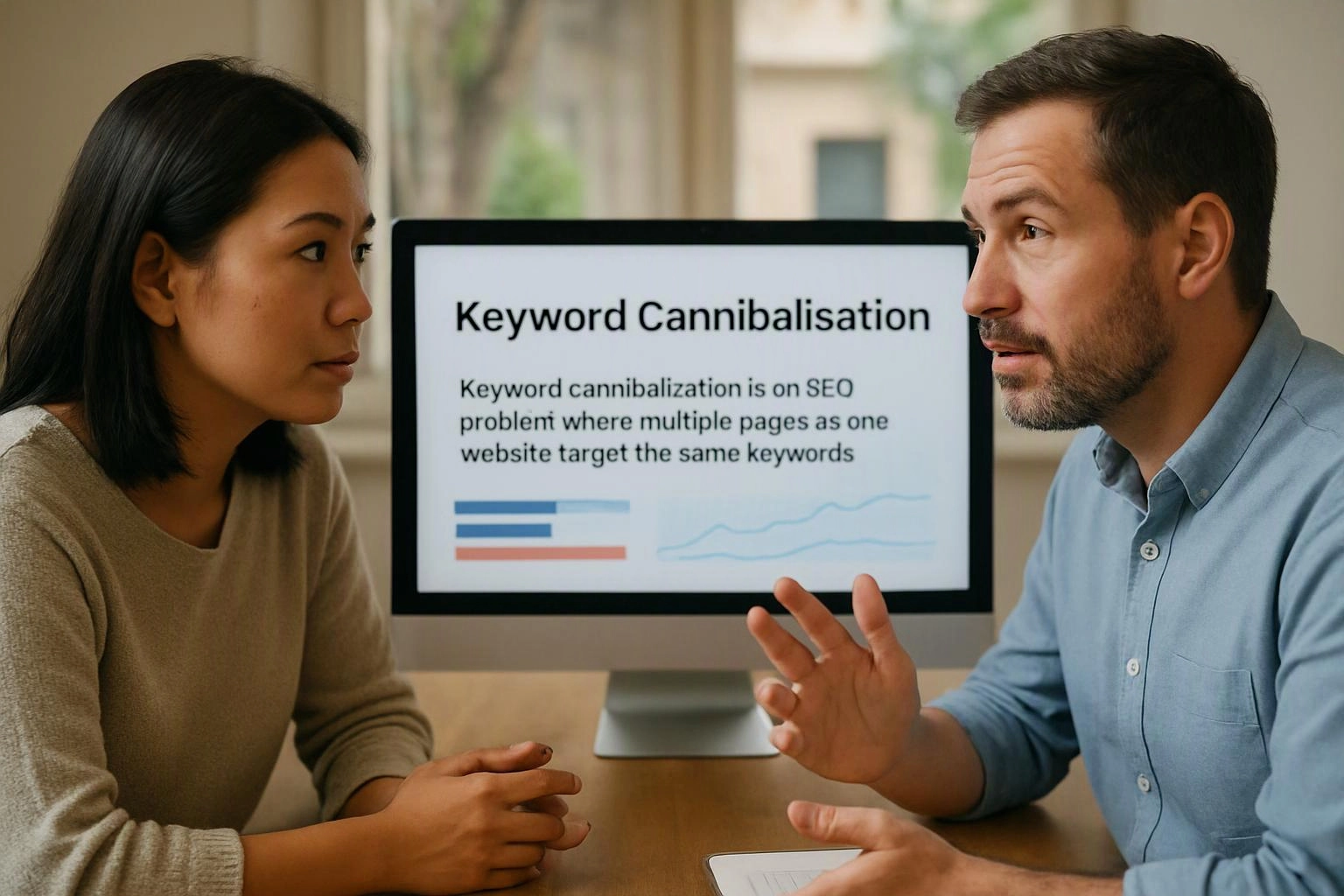
Keyword Cannibalisation develops when separate pages send similar signals about the same query. Search engines may select an unexpected page, change the ranking page over time, or show a less useful result. The effect depends on page purpose, content depth, internal links, and the relationship between the pages.
Related glossary terms: Duplicate Content, Internal Linking, Search Intent.
A practical review compares the target query with each page's heading, copy, title tag, and conversion purpose. A service page and an educational article may use related wording without competing when their Search Intent differs. Clear page roles, focused briefs, and suitable Canonical URL signals help separate related topics.
Expert Note
When we plan SEO Content Writing, we assign each page a primary search intent and a distinct role in the site structure. We review existing pages before drafting new content, then check headings, internal links, and page purpose for overlap. We also separate useful topic coverage from genuine competition between pages.
Keyword Cannibalisation in Practice: A Real-World Example
A local electrician has separate pages for emergency electrical repairs and general electrical services, but both pages target the same broad query and offer similar information. The content plan should clarify each page's purpose so one page serves urgent searches and the other covers wider service enquiries.
Related Services
Related Terms
Duplicate Content
Duplicate Content is a search engine optimisation issue where substantially similar text appears at more than…
Internal Linking
Internal Linking is the practice of connecting pages within the same website through clickable links. These…
Search Intent
Search Intent is the underlying purpose behind a search query, such as learning, comparing options, or…
Title Tag
A Title Tag is an HTML element that names a web page for search results and…
SEO-Adelaide.au
Have Questions About Keyword Cannibalisation?
Contact SEO-Adelaide.au for practical guidance on Keyword Cannibalisation and related seo services work in Adelaide.