
Keyword Cannibalisation: Signs Your Pages Are Competing
Keyword cannibalisation symptoms show that related pages are competing for the same search intent, weakening relevance and confusing search engines. At SEO-Adelaide.au, we check query targeting, search results, internal links and page content to identify the cause and recommend consolidation, repositioning or clearer optimisation.
What Keyword Cannibalisation Looks Like
Keyword cannibalisation is an SEO problem in which multiple pages target overlapping search intent and prevent the clearest page from consistently ranking.
Search engines may move between competing URLs because each page sends similar relevance signals. The result can be divided organic traffic, weaker page relevance and less predictable organic search results.
The issue is not simply that pages mention the same target keyword. Related pages can rank well together when they serve clearly different needs. Cannibalisation occurs when their content, purpose and keyword targeting overlap without a clear URL selection.
Which Symptoms Show That Pages Are Competing?
The clearest symptoms are unstable rankings, a different URL appearing than the intended page, divided clicks and overlapping pages serving the same search need.
We compare search performance over time and check whether the changes affect one query, a group of overlapping keywords or a wider part of the site. Each symptom needs context because ranking changes can also come from technical issues, content quality or changes in search demand.
| Symptom | What we inspect | What it can indicate |
|---|---|---|
| Ranking volatility | Whether multiple URLs appear for related queries | Unclear relevance between competing pages |
| Wrong URL ranking | Which page appears against the intended target | Search engines may prefer a less suitable page |
| Declining organic traffic | Clicks across all related URLs | Traffic may be divided between pages |
| Impressions with a weak click-through rate | The pages and snippets shown in search results | The visible result may not match the search need |
One isolated ranking change does not prove keyword cannibalisation. The pattern becomes stronger when several URLs alternate for similar queries and the pages offer little difference in search intent.
How We Detect Keyword Cannibalisation
We detect keyword cannibalisation by comparing ranking URLs, query performance, page intent, content overlap and internal linking signals.
Our review connects data with the actual purpose of each page. That step helps us separate genuine content competition from normal variation in organic search results.
Common Keyword Cannibalisation Mistakes
Common keyword cannibalisation mistakes start with unclear keyword targeting and grow through weak content strategy or page architecture. These mistakes can reduce organic visibility even when every individual page appears well optimised.
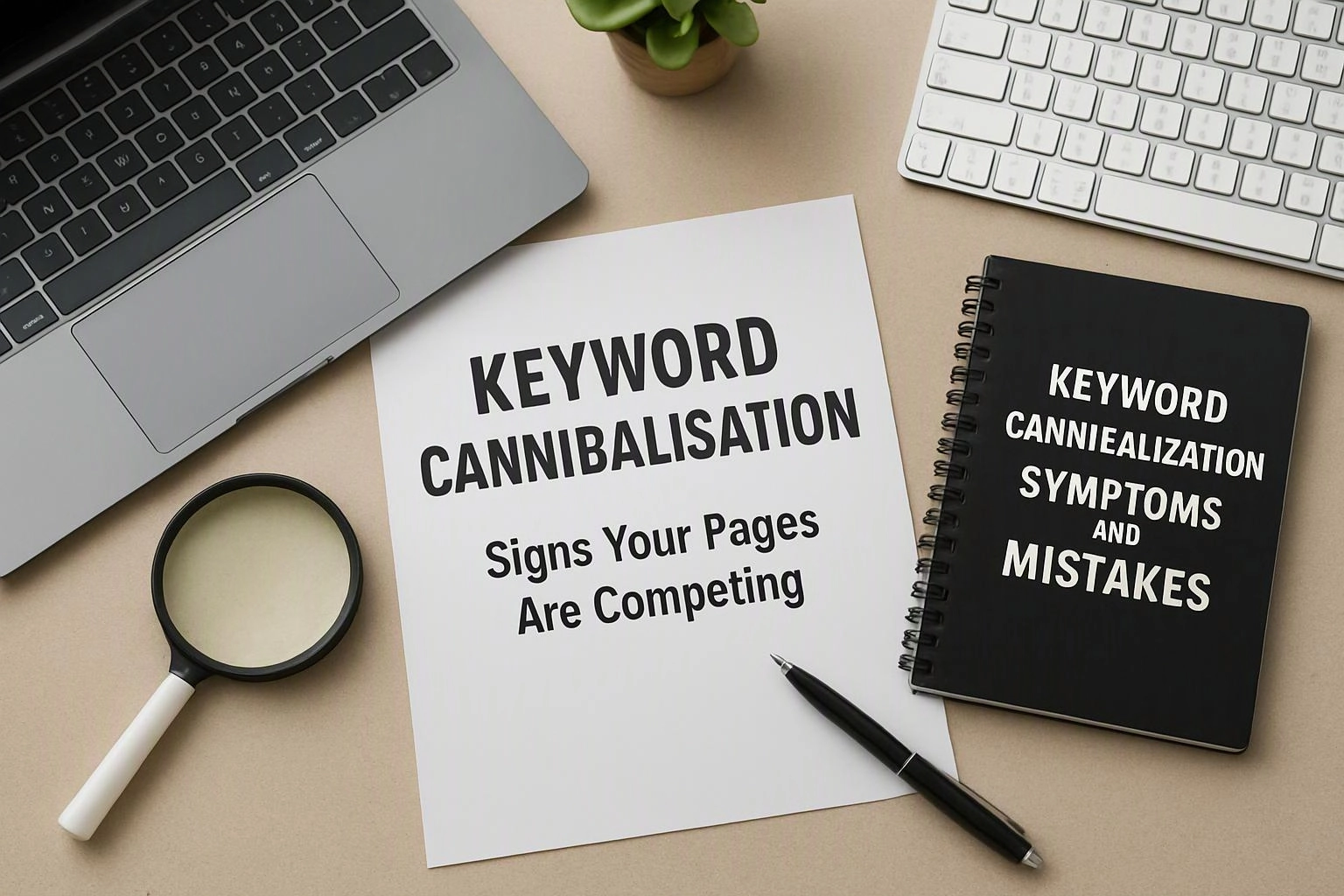
We assess the reason for the overlap before changing a URL. The right fix may involve content consolidation, page repositioning, clearer internal links or a technical signal.
Targeting the Same Keyword on Every Related Page
Targeting the same keyword on every related page creates competing pages with no clear search intent distinction. This usually happens when keyword mapping focuses on phrases but not on the need behind each phrase.
The cost is divided relevance and weaker URL selection across organic search results. We assign each page a primary purpose, separate genuine content overlap and revise the target keyword where needed.
Creating Separate Pages for Minor Keyword Variations
Separate pages for minor keyword variations create duplicate intent when searchers expect the same answer. The approach often comes from treating every keyword variant as a separate topic.
The cost is thin content quality and limited topic coverage across several URLs. We combine pages when their purpose is the same and keep them separate when the search intent or audience is genuinely different.
Publishing New Content Without Checking Existing URLs
Publishing new content without checking existing URLs can create a second page for an established search need. Content calendars often cause this problem when they do not connect to a current content audit.
The cost is wasted production effort and uncertain URL selection. We review existing content before publication, identify overlap and decide whether the new idea should update, expand or replace an existing page.
Optimising Titles and Headings for the Same Search Intent
Optimising titles and headings for the same search intent makes separate pages appear interchangeable. This can happen even when the body copy contains different wording.
The cost is diluted on-page SEO because the title tag and heading signals do not distinguish the pages. We give each URL a clear focus and align its headings with the need it serves.
Using Internal Links That Point to Competing Pages
Internal links that point to competing pages can spread authority and anchor text across unclear destinations. This form of internal-link competition often reflects an unresolved site architecture decision.
The cost is weaker guidance for users and search engines. We adjust internal links, review anchor text and direct important pathways towards the canonical page.
Merging Pages Without Preserving the Strongest Signals
Merging pages without preserving the strongest signals can remove useful relevance, backlinks or organic traffic. The problem occurs when content consolidation is treated as a copy-and-paste task.
The cost is lost authority and a poor user journey. We select the strongest source material, preserve valuable backlinks, set the canonical URL and create a redirect where the old address should pass users and signals to the new page.
Deleting a Competing Page Without Assessing Its Value
Deleting a competing page without assessing its value can remove search demand coverage, backlinks or useful content assets. This mistake usually happens when overlap is treated as proof that one page has no value.
The cost is avoidable loss of organic visibility. We assess the page's search demand and backlinks, then use redirect mapping or reuse valuable content when the page should not remain separate.
Changing URLs and Target Keywords Without Updating the Site
Changing URLs and target keywords without updating the site leaves old signals pointing to an outdated destination. The change often affects redirects, internal linking, the XML sitemap and keyword mapping at the same time.
The cost is broken relevance and uncertain URL selection. We update redirects and internal links, check the XML sitemap and align the revised page with its mapped search intent.
What We Change After Finding Competing Pages
We choose the clearest page for each search intent, then consolidate, reposition, improve or redirect competing URLs according to their content and authority.
Content consolidation suits pages with duplicate intent and strong shared relevance. Page repositioning suits pages that can serve different needs after their focus is clarified.
We may also improve on-page SEO, adjust internal linking or use canonicalisation when several URLs need to exist but one is the preferred version. Our SEO Content Writing work supports clearer page purpose, useful coverage and a stronger relationship between the target keyword and the reader's need.
When SEO-Adelaide.au Should Review the Problem
Contact our team when competing pages affect important search queries, when the correct URL will not rank, when content changes have created overlap or when the fix requires redirects and structural updates.
We can review the issue as part of Keyword Research, On-Page SEO or a wider content audit. The review is most useful when ranking data, page history and the intended customer journey are considered together.
Contact our team about a content audit so we can assess the competing pages and recommend the appropriate change.
How to Prevent Keyword Cannibalisation
Prevent keyword cannibalisation by assigning one primary search intent to each page and checking existing content before publishing or substantially revising a URL.
Our keyword strategy connects search intent mapping with content planning. Each content brief should explain the page's audience, purpose, target keyword and relationship to existing URLs.
We also review internal linking before publication and after major content changes. Clear anchor text, consistent URL selection and regular content audits help keep competing pages from developing unnoticed.
Questions About Keyword Cannibalisation
Can keyword cannibalisation cause the wrong page to rank?
Yes, keyword cannibalisation can cause the wrong page to rank when several URLs serve overlapping search intent. We compare the ranking URL with the intended page, then clarify the preferred destination through content changes, internal links, canonicalisation or a redirect.
Is keyword cannibalisation always harmful?
No, keyword cannibalisation is not always harmful when separate pages satisfy clearly different search intent. We assess the results, page purpose and user need before deciding whether the URLs should remain separate.
Should competing pages be merged or kept separate?
Competing pages should be merged when they serve duplicate intent, while pages with distinct needs should remain separate. We use content overlap, URL performance, backlinks and search intent mapping to choose the right structure.
How can Google Search Console reveal keyword cannibalisation?
Google Search Console can reveal keyword cannibalisation by showing several URLs receiving impressions or clicks for the same query group. We compare those URLs with their page intent and ranking behaviour to determine whether the overlap needs action.