
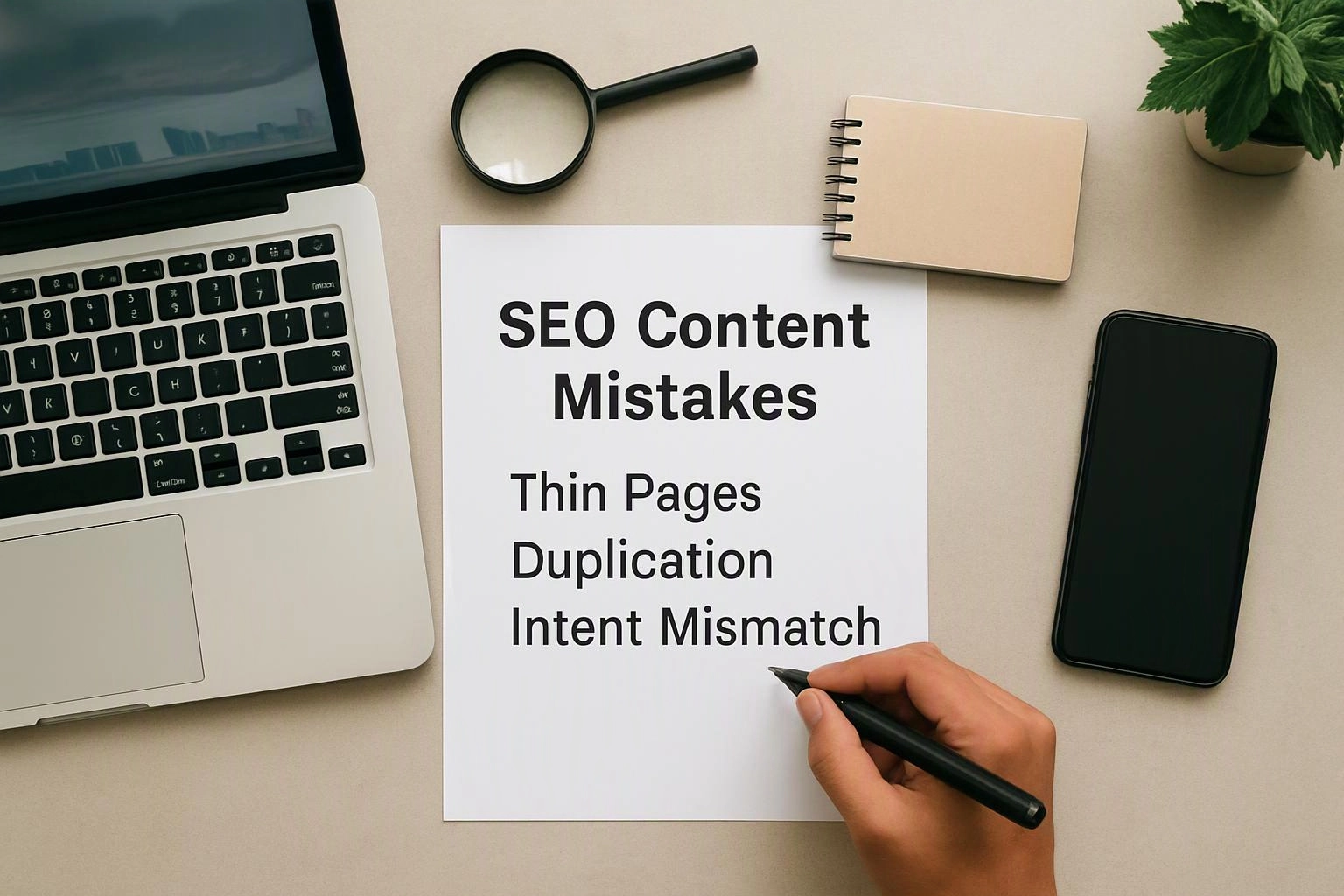
SEO Content Mistakes: Thin Pages, Duplication, and Intent Mismatch
SEO content mistakes include thin pages, duplicate content and search intent mismatch; SEO-Adelaide.au audits relevance, coverage and page purpose, then plans focused fixes. At SEO-Adelaide.au, we use an intent-led review to decide which pages need improvement, consolidation, redirection or restructuring.
Which SEO Content Mistakes Damage Organic Performance?
SEO content mistakes damage organic performance when pages provide too little useful information, repeat another page's meaning or fail to satisfy the searcher's purpose.
These content quality issues weaken search relevance and can make organic search results less useful. A page may contain the right keywords and still fail when its topic coverage, structure or page purpose does not meet user needs.
Thin Pages That Do Not Answer the Searcher
Thin content is a page that offers too little useful information for the search query it targets. Thin pages often happen when copy is created to fill a template, target a keyword or publish a service variation without adding a clear answer.
The impact is weak topical coverage and limited relevance. We fix thin pages by identifying the content gap, clarifying the main question and adding useful coverage that supports the page purpose.
Duplicate Pages That Compete With Each Other
Duplicate content is copy or page meaning that substantially overlaps with another URL. Near-duplicate pages often happen when similar services, locations or product variations are published without a distinct reason for each page.
Overlapping pages can create keyword cannibalisation because search engines must choose which URL best represents the topic. We compare the pages, select the strongest purpose and use a canonical URL, consolidation or a redirect when that is the clearest solution.
Content That Misses Search Intent
Search intent is the purpose behind a search query, such as learning, comparing options or taking action. A page misses intent when an informational query leads to a sales-heavy page, or a commercial query leads to content that does not help the reader choose.
Intent mismatch can reduce engagement and relevance in search results. We compare the page with the query and the current results, then align the format, depth and next step with informational, commercial or transactional intent.
Keyword-First Writing Without a Clear Topic
Keyword targeting becomes a problem when a keyword is chosen before the primary topic and reader need are clear. This approach can produce awkward copy, scattered subtopics and a content brief with no useful purpose.
The result is weak semantic relevance and inconsistent topic coverage. We define the primary topic first, map related questions to it and use the keyword naturally where it supports the reader.
Unhelpful Introductions and Buried Answers
Answer-first writing gives the reader a clear response near the start of the page. Unhelpful introductions often begin with broad claims, repeat the heading or delay the answer behind unnecessary background.
Buried answers make the content harder to scan and weaken user experience. We improve content structure with direct openings, useful heading hierarchy and sections that follow the reader's questions.
Outdated Information That Reduces Trust
Content freshness means keeping information accurate and useful as services, processes and user needs change. Outdated content happens when facts, recommendations, links or examples are not checked during editorial review.
Factual errors reduce trust and can make an otherwise relevant page unreliable. We review claims, remove stale details and refresh sections that no longer support the page purpose.
Poor Internal Linking Between Related Pages
Internal linking connects related pages so readers and search engines can understand the site's topic relationships. Weak internal links often occur when pages are published separately without a topic cluster or planned site architecture.
Weak connections can hide useful supporting content and make important pages harder to reach. We create relevant links, use descriptive anchor text and connect pages where the relationship helps the reader.
Over-Optimised Copy That Sounds Unnatural
Keyword stuffing is the repeated or forced use of keywords in copy, headings or metadata. It usually happens when writing follows a keyword target too rigidly or treats repetition as a measure of optimisation.
Unnatural wording harms readability and can reduce perceived content quality. We edit for clear natural language, preserve the primary topic and use related terms only where they make the explanation more useful.
How We Diagnose Thin, Duplicate and Misaligned Content
SEO-Adelaide.au diagnoses content problems by comparing each URL with its target query, search intent, unique value and relationship with nearby pages. Our content audit looks at the URL inventory and the role each page should play.
We use the findings to separate pages that need a content refresh from pages that should be consolidated, redirected or restructured.
| Audit check | What we assess | Possible direction |
|---|---|---|
| Page coverage | Whether the page answers the query with sufficient useful detail | Refresh or restructure the content |
| URL overlap | Whether nearby pages repeat the same topic or purpose | Consolidate pages or plan a redirect |
| Search intent | Whether the format and answer match the searcher's purpose | Rework the page purpose and on-page SEO |
| Site relationships | Whether internal links support the topic cluster | Improve links and anchor text |
How We Fix SEO Content Mistakes Without Losing Relevance
SEO-Adelaide.au fixes content mistakes by assigning a clear purpose to each URL, improving useful coverage, consolidating overlap and aligning on-page elements with the intended search. Our process protects relevant information while removing confusion between pages.
Our SEO Content Writing work focuses on useful explanations that support a defined page purpose. Our Content Marketing planning connects those pages to wider topic coverage without creating overlapping copy.
When Should You Call SEO-Adelaide.au About Content Problems?
You should call SEO-Adelaide.au when several pages target the same topic, important pages lack useful coverage, rankings do not match the page purpose or your team needs a structured content remediation plan. We can assess the issue before your team spends time rewriting pages that may need consolidation.
We turn the review into a practical content strategy with clear page actions and priorities. Request an assessment through our contact page.