
Types of SEO: Which Approach Does Your Website Need?
Types of SEO services address different search visibility needs. SEO-Adelaide.au matches technical, on-page, local, ecommerce, enterprise and international SEO to your website structure, audience, market and growth goals. We select an SEO approach according to your website structure, search intent, audience, market and business goals.
What Are the Main Types of SEO?
SEO services are selected according to website structure, search intent, audience, market and business goals.
The main types of SEO are technical, on-page, local, ecommerce, enterprise and international SEO, with each type addressing a different search visibility need. We may combine several disciplines when a website serves more than one audience or search journey.
Technical SEO supports access, crawling and indexation. On-Page SEO improves content relevance and page structure. Local SEO supports local search, while Ecommerce SEO focuses on products and commercial intent.
Enterprise SEO manages complexity across large websites. International SEO helps multilingual or multiregional websites target the right language and market.
How Does Each Type of SEO Service Work?
Each SEO service type addresses a different part of the search journey. We match the work to the website structure, audience and business objective.
| SEO service | Main focus | Useful when |
|---|---|---|
| Technical SEO | Crawlability, indexation and site architecture | Search engines struggle to access or understand the website |
| On-Page SEO | Content relevance and page structure | Pages need clearer alignment with search intent |
| Local SEO | Local search visibility and business information | Customers search for services in a defined area |
| Ecommerce SEO | Product pages, category pages and commercial intent | The website sells products online |
| Enterprise SEO | Site governance, workflows and scalable templates | The website has many pages, teams or systems |
| International SEO | Country and language targeting | The website serves multiple regions or languages |
Technical SEO
Technical SEO is a search optimisation discipline that helps search engines crawl, interpret and index a website.
We review crawlability, indexation, site architecture, structured data and Core Web Vitals. The work can also address broken paths, duplicate pages and technical barriers that weaken organic search visibility.
On-Page SEO
On-Page SEO is a search optimisation discipline that aligns page content and structure with search intent.
We assess title tags, headings, internal linking and content quality. Keyword research helps us understand the language people use, while content optimisation makes the page more useful for that search.
Local SEO
Local SEO is a search optimisation discipline that improves visibility for searches connected to a service area.
We can review the Google Business Profile, local landing pages, citations and reviews. Consistent information helps search engines connect the business with relevant local search intent.
Ecommerce SEO
Ecommerce SEO is a search optimisation discipline that helps product and category pages reach people with commercial search intent.
We review product pages, category pages, faceted navigation and product schema. The aim is to make products discoverable while keeping the conversion path clear for shoppers.
Enterprise SEO
Enterprise SEO is a search optimisation discipline for large websites with complex systems, teams and publishing processes.
We consider workflow governance, scalable templates, stakeholder coordination and site migrations. Clear ownership helps SEO recommendations move through larger organisations without creating inconsistent changes.
International SEO
International SEO is a search optimisation discipline for multilingual or multiregional websites.
We review hreflang implementation, country targeting and language targeting. The structure should help search engines serve the appropriate version to each market without confusing similar pages.
What Is the Difference Between On-Page SEO and Off-Page SEO?
On-Page SEO improves elements on your website, while Off-Page SEO develops signals from other relevant websites and online entities.
On-Page SEO covers content, headings, internal links, page structure and search intent. Off-Page SEO focuses on backlinks, mentions and wider brand authority that support how other entities view the website.
We connect both areas to the same SEO strategy. Strong content gives other websites something useful to reference, while relevant external signals can support the authority of well-structured pages.
When Do You Need Technical SEO and On-Page SEO Together?
Technical SEO and On-Page SEO work together when search engines can access the website but the pages still need stronger relevance, structure or intent alignment.
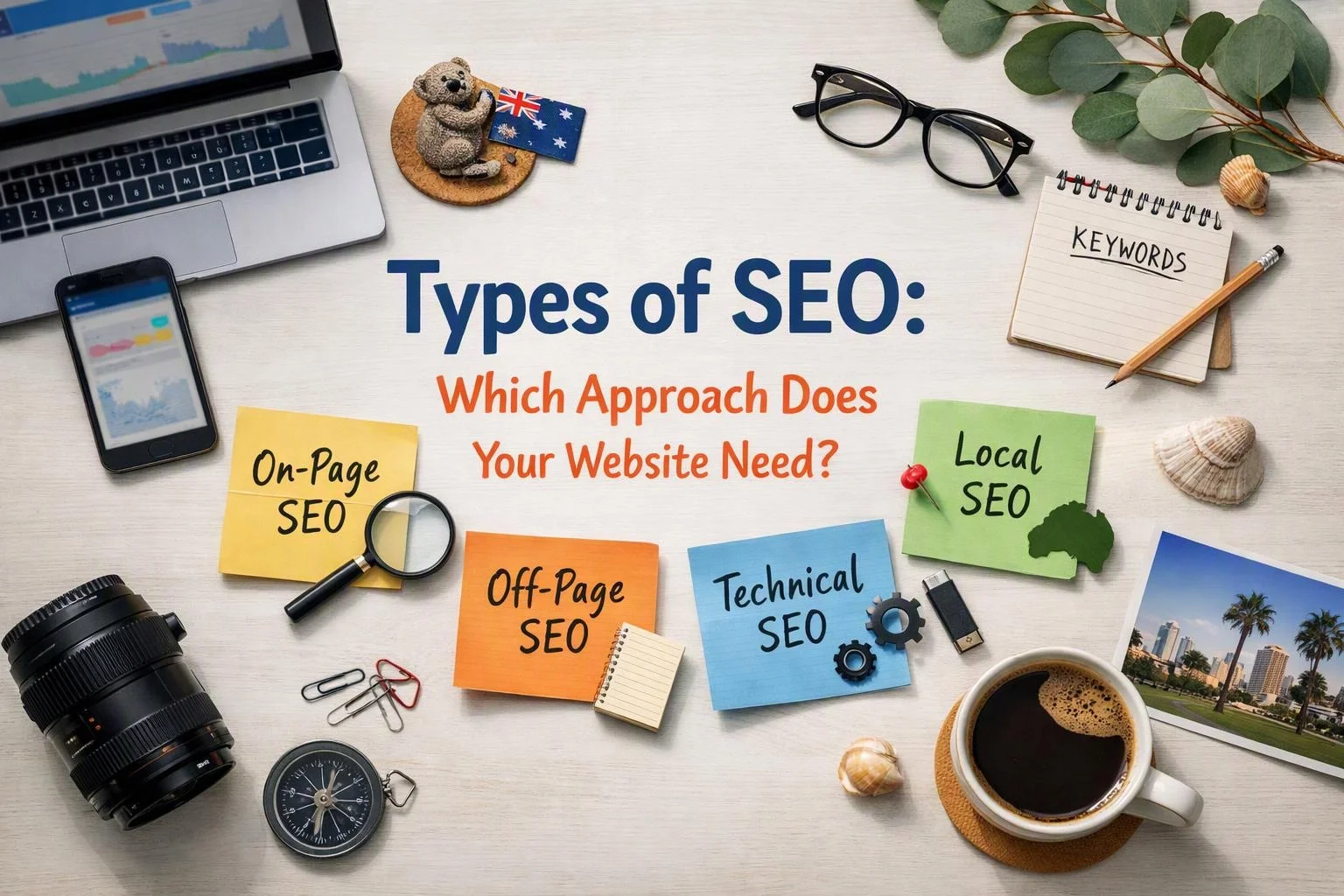
We use a technical audit to identify access problems and content analysis to assess relevance. This combined view helps us prioritise changes that support both search engines and users.
How Do SEO Services Work Together?
SEO strategy works best when each service supports the same business objective. We set the scope around the website condition, search intent, audience and conversion path.
We can combine services into one plan or sequence them around the most urgent constraint. The right order depends on whether the main issue is access, relevance, market targeting or the conversion path.
Which SEO Approach Does Your Website Need?
The right SEO approach depends on your website type, technical condition, audience, target market and business objective.
A service website may need technical and on-page work with a local focus. An online store may need ecommerce SEO supported by technical improvements and content that matches commercial intent.
Large websites often need enterprise SEO because governance, templates and stakeholder coordination affect implementation. A multilingual website may need international SEO, including careful hreflang and language targeting.
We choose priorities through an SEO audit rather than applying every service type to every website. That approach keeps the work connected to your website goals and growth objectives.
How We Build an SEO Service Plan
Our team builds an SEO service plan by connecting evidence from the website with the audience, market and business goals.
We explain what should happen first, what depends on another task and who is responsible for implementation. This creates a practical plan instead of a list of disconnected recommendations.
What Should an SEO Quote Include?
An SEO quote should explain the selected services, priority work, deliverables, implementation responsibilities and factors that determine the cost.
We outline the service scope, technical fixes, content recommendations and reporting approach. The quote should also make clear whether our team, your team or another party will implement each recommendation.
Website complexity and target market affect the work involved. Page templates, technical systems, content requirements, market targeting and the number of SEO disciplines selected can all change the scope.
To obtain an exact quote, contact our team with your website details, business model, target audience and growth objectives.
Questions About Choosing SEO Services
Can a small business need more than one type of SEO?
Yes, a small business can need more than one type of SEO when its website has several search visibility needs. Local SEO may support local discovery, while technical and on-page work can improve access and relevance.
Which type of SEO is best for an online store?
Ecommerce SEO is the main approach for an online store because it focuses on product pages, category pages and commercial search intent. Technical and on-page SEO may support the store when structure or content relevance needs attention.
Does technical SEO include website speed?
Yes, technical SEO can include website speed because performance affects how people use pages and how search engines assess technical quality. Core Web Vitals are part of the technical review.
Can local SEO and ecommerce SEO be used together?
Yes, local SEO and ecommerce SEO can be used together when an online store serves customers in defined areas. Local work supports area-based discovery, while ecommerce work supports product and category visibility.
What type of SEO is needed for a multilingual website?
International SEO is needed for a multilingual website because language targeting and hreflang help search engines understand which page version suits each audience. Technical and on-page checks also support clear multilingual SEO.