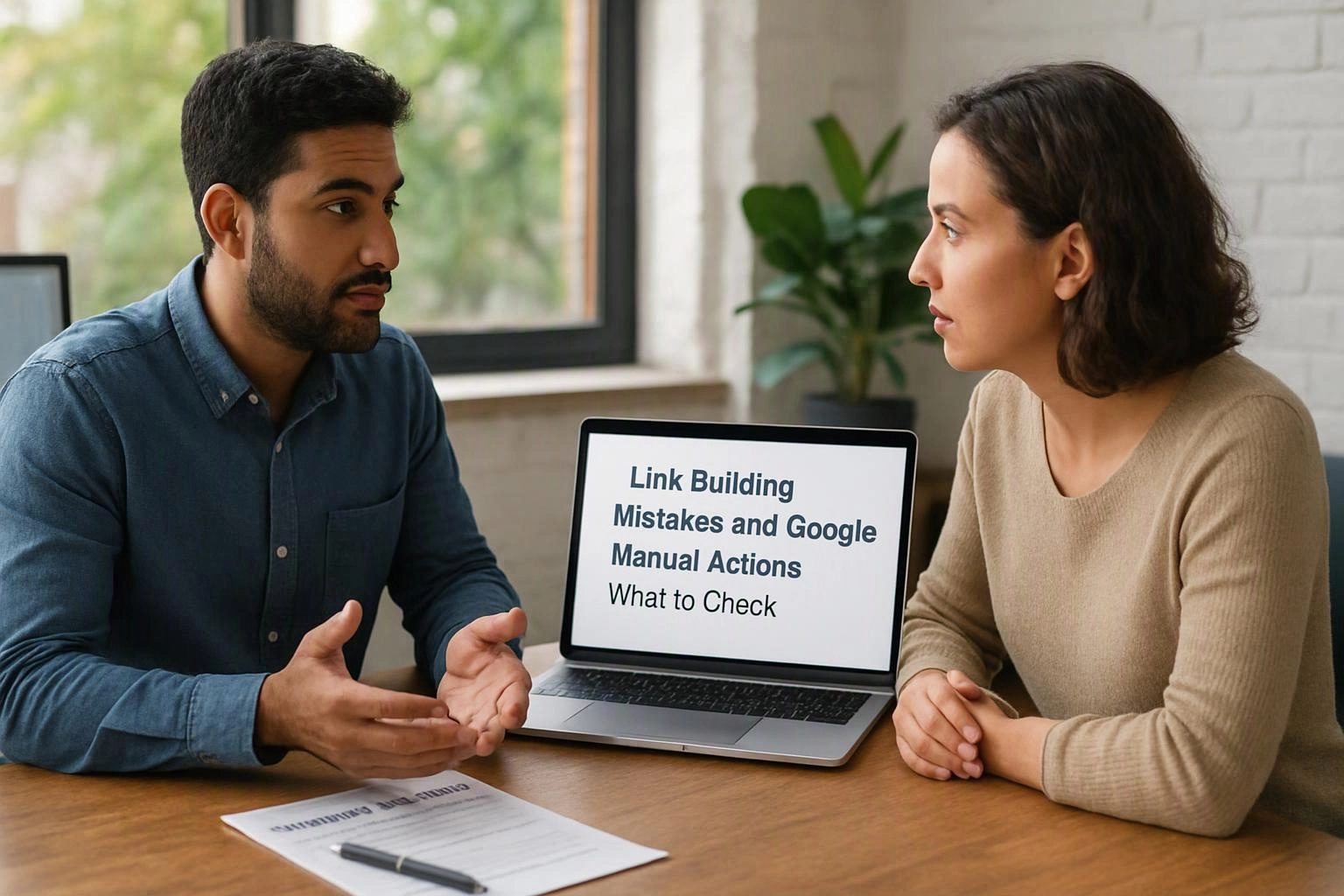
Link-Building Mistakes and Google Manual Actions: What to Check
Link-building mistakes and Google manual actions require a careful backlink audit, removal or disavowal decisions, reconsideration request preparation and ongoing monitoring. At SEO-Adelaide.au, we check the link profile, identify manipulative patterns and manage the recovery work.
What Does an Unnatural Links Manual Action Mean?
Google manual action is a Google Search penalty applied when reviewers identify link activity intended to manipulate search rankings.
Google Search Console usually shows the manual action notice and explains the broad issue. Unnatural links can include paid links, link spam or other patterns that breach Google’s guidelines. Search rankings may fall while the action remains active.
Which Link-Building Mistakes Should You Check First?
A backlink audit should check link sources, linking patterns, anchor text, relevance and evidence of manipulation before corrective work begins.
The audit should also connect each risk to a corrective action and the evidence needed for a reconsideration request.
| Pattern to check | Why it may be risky | Evidence to collect |
|---|---|---|
| Paid links | Payment may have been intended to influence rankings. | Publisher records, invoices and outreach history. |
| Exact-match anchor text | Repeated commercial wording may suggest a link scheme. | Anchor text analysis and affected target URLs. |
| Irrelevant referring domains | The links may lack a useful editorial reason. | Linking page context and domain relationship. |
| Unsuccessful corrective work | A reconsideration request may lack proof of a serious clean-up. | Link removal records, contact attempts and disavow file decisions. |
Buying Links to Influence Rankings
Paid links are links bought to influence search rankings, and they can form part of a link scheme when their purpose is ranking manipulation.
This mistake happens when a campaign treats link placement as a transaction instead of an editorial recommendation. The cost may include the original placement, later removal outreach and the work needed to document the correction.
We review payment records, link attributes and anchor text. We request removal where appropriate and record the outcome for the reconsideration request.
Using Exact-Match Anchor Text Too Often
Anchor text is the clickable wording used in a backlink, while exact-match keywords repeat a target search phrase closely.
This mistake happens when link builders use commercial wording too often across unrelated referring domains. The cost is a less natural link profile and additional analysis to separate risky patterns from legitimate mentions.
We compare exact-match anchors with branded anchors, page context and the target URL. We document changes or removal requests where the pattern supports corrective action.
Building Links from Irrelevant Websites
Irrelevant backlinks are links from websites with little topical connection to the linked page.
This mistake happens when campaign targets are chosen for link availability instead of topical relevance. The cost may appear as wasted outreach and a weaker link quality profile.
We review each referring domain, linking page and contextual link. We classify links according to relevance, editorial purpose and risk before deciding on removal or disavowal.
Creating Guest Posts at Scale
Scaled guest posting is the production of guest articles mainly to place backlinks across many websites.
This mistake happens when article marketing focuses on volume, repeated topics or controlled anchor text. The cost can include reviewing a large link-building history and contacting many publishers.
We assess guest posts for editorial value, content quality, linking patterns and signs of a link scheme. We preserve useful evidence and address links that were created mainly to manipulate rankings.
Using Private Blog Networks and Expired Domains
A private blog network uses connected websites to create manipulative links, while an expired domain may be reused to pass authority through content or a redirect.
This mistake happens when domain history and ownership patterns are not examined closely. The cost may include tracing related domains, reviewing redirects and documenting a broad set of manipulative links.
We inspect domain relationships, linking pages and redirect paths. We record the network pattern and choose link removal or disavowal actions that match the evidence.
Accepting Sitewide Footer or Sidebar Links
Sitewide links are repeated links placed across many pages, including footer links and sidebar links.
This mistake happens when a site-wide placement is treated as a simple partnership or branding link. The cost may include reviewing many duplicate links and explaining why the pattern is or is not manipulative.
We assess placement, wording, relevance and link attributes. We request changes or removal when the pattern creates an unnatural link signal.
Ignoring Links from Hacked or Spam Websites
A hacked website backlink is a link created through compromised content, malware or spam pages on a referring domain.
This mistake happens when owners assume every unwanted link can be ignored without checking its source. The cost may include identifying affected pages and separating malicious activity from links created by the business.
We review the referring domain, linking page and surrounding content. We document hacked or spam patterns and include appropriate disavow links decisions in the recovery record.
Submitting a Reconsideration Request Without Evidence
A reconsideration request needs clear evidence that the site owner understood the issue and completed meaningful corrective action.
This mistake happens when a request contains a general apology but no link removal outreach, decision record or disavow file explanation. The cost is a delayed recovery effort and further work to organise the evidence.
We prepare a record of findings, contact attempts, removals, unresolved links and disavow decisions. We then write the request around the manual action notice and the corrective action completed.
How We Check a Google Manual Action for Unnatural Links
We verify the manual action notice, audit the backlink profile, classify risky links, document corrective work and prepare a clear reconsideration request.
Our review links each decision to evidence, so the recovery record explains what happened and what changed.
What Should a Link Recovery Review Include?
A link recovery review should connect each suspected link pattern to its likely cause, corrective action and supporting evidence.
We build a backlink inventory that records the referring domain, linking page, target URL and link attribute. We then compare the inventory with anchor text analysis and referring domain review.
Link removal evidence should show who was contacted, what was requested and what changed. A disavow file should be supported by a clear decision record, not used as a substitute for understanding the backlink profile.
When Should You Contact SEO-Adelaide.au About a Manual Action?
Contact our team when the manual action involves a large or unclear backlink profile, undocumented link-building work or an unsuccessful earlier recovery attempt.
We can help when the evidence is spread across different platforms or when the business is unsure which links require removal, disavowal or further review.
How Do You Prevent Unnatural Link Problems After Recovery?
Preventive link management uses documented acquisition rules, relevant editorial links, natural anchor text and regular backlink monitoring.
We recommend a link acquisition policy that records why a link is appropriate, who controls the placement and how the link is presented. Editorial links should support users and fit the subject of the linking page.
Anchor text monitoring can identify new commercial patterns before they become a wider concern. Google Search Console and regular backlink monitoring help keep the link profile under review.
How Can You Request a Link-Building Recovery Review?
You can request a recovery review from our team by supplying the manual action notice, relevant Search Console access and available link-building records.
Our SEO Penalty Recovery review covers the backlink profile, link-building mistakes, corrective options and reconsideration request preparation. We also explain how our Link Building work can follow safer editorial rules after recovery.
Supply previous outreach records, known paid links, agency reports and any existing disavow file. These records help us connect the backlink audit to the decisions Google needs to assess.
Free Estimates Available.
Questions About Link-Building Mistakes and Manual Actions
Can a Google manual action be caused by backlinks you did not build?
Yes, a Google manual action can involve backlinks you did not build when the overall profile contains patterns that appear manipulative. We investigate the source, history and context before recommending corrective action.
Should you remove unnatural links before submitting a reconsideration request?
Yes, you should pursue reasonable link removal before submitting a reconsideration request when the links can be identified and the publisher can be contacted. We document the outreach and explain unresolved links in the request.
What evidence should accompany a Google reconsideration request?
A Google reconsideration request should include the manual action notice, backlink audit findings, link removal outreach, responses, corrective changes and the reasoning behind any disavow file.
Does a disavow file remove a Google manual action automatically?
No, a disavow file does not remove a Google manual action automatically. The file is one part of corrective work, and the reconsideration request must explain the wider review and actions taken.